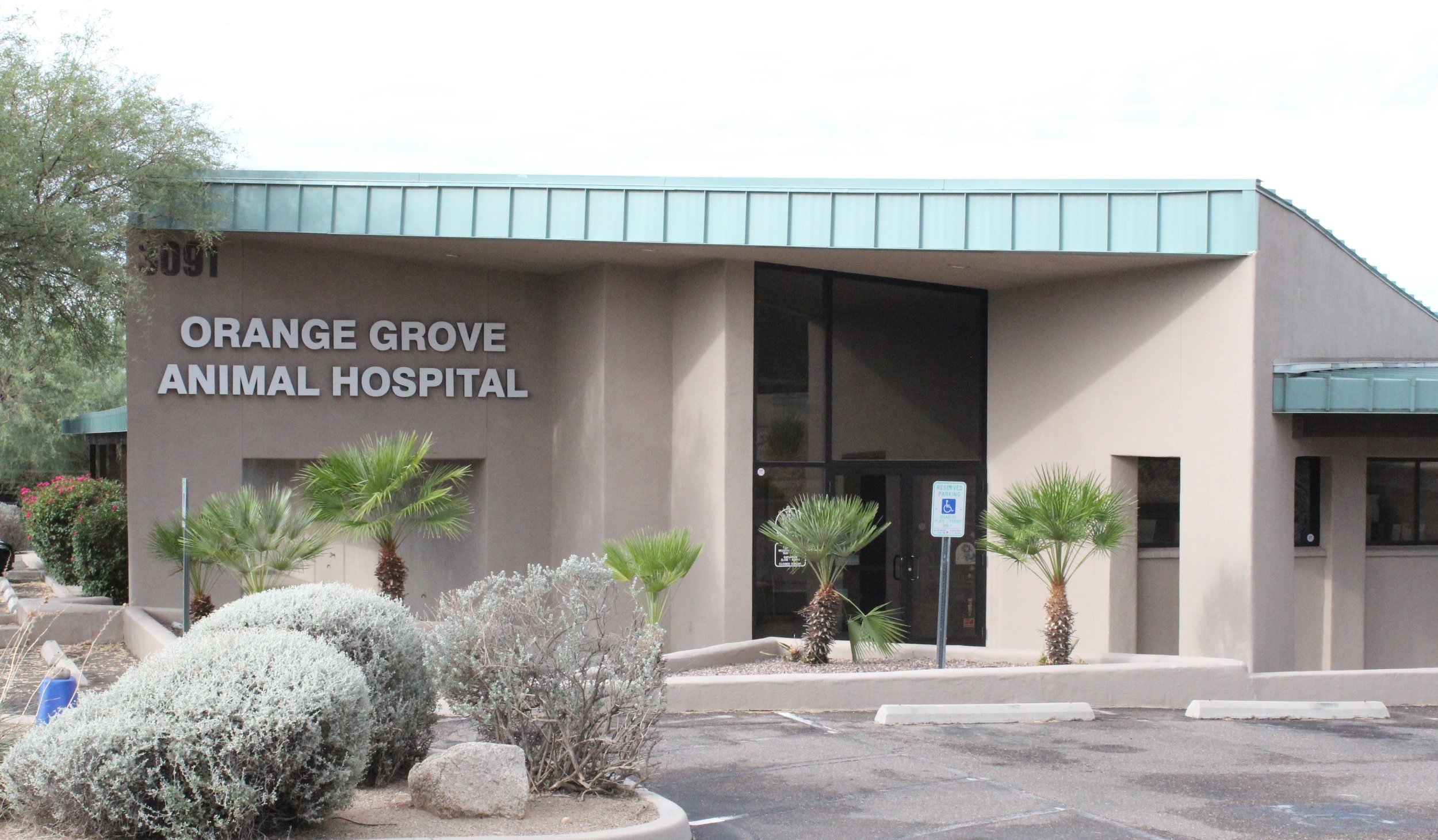

Extraordinary care for extraordinary animals.
Call (520) 877-2626 during business hours or
Orange Grove Animal Hospital’s Pet Portal:
Order prescription refills, schedule appointments, and check vaccines and reminders with just a few clicks.
More Than Just Pet Care
At Orange Grove Animal Hospital we are here to not only improve your pet's health, but also your own relationship with your pet. That means helping you be the best pet owner you can be with helpful tips and tricks for your animal's care.
Boarding Care.
Learn about our wide variety of boarding services.

Call (520) 877-2626
during business hours or
Full Service Pet Hospital for Tucson, AZ
With a focus on preventative medicine, our dedicated team of veterinarians and technicians follow the latest vaccine protocols for our dog and cat patients. We also offer dentistry for all mammals, including small exotics like rabbits and guinea pigs. We provide spaying and neutering services for most species, nutrition counseling for all species, and a variety of prescription and non-prescription diet plans to meet your pet’s needs.
When your pet needs hospital or emergency care, you can be confident in knowing we have surgical specialists who provide diagnostic and consulting services in our hospital. Call or stop by today to get the medical care your pet needs.
*NOTE: Please call ahead to confirm availability for emergency care. Thank you.
-

Services
Orange Grove Animal Hospital offers a wide range of general appointment, vaccine, surgical and dental services for cats, dogs, birds, reptiles, ferrets and exotic small mammals. These services may range from the routine to the unexpected.
-

Contact
Your beloved pet deserves the most caring attention from experienced veterinarians and techs. Call us today to set an appointment or learn more about our services.
-

Pharmacy
Local care online convenience. Give your pet the best possible care.